The business and the challenge
A plywood brand selling through dealers and a physical store. Plywood is a considered purchase with a long gap between first awareness and a buying decision, and most of the decision happens offline — someone walks into a store, touches the product and asks the dealer. That makes the usual lead-generation playbook a poor fit. Counting Instant Form submissions would have measured the wrong thing entirely.
Objective
Build familiarity cheaply at the top, capture the people already searching, and drive measurable footfall to the store — rather than force enquiries from an audience that was not ready to give them.
Strategy
Split the two platforms by job. Meta carried awareness and engagement, where attention is cheap and the brand needed to be seen repeatedly by the same local audience. Google carried demand capture and local action — the searches, the direction requests, the calls. The two were never expected to produce comparable numbers, and the reporting was set up to keep them separate.
Execution
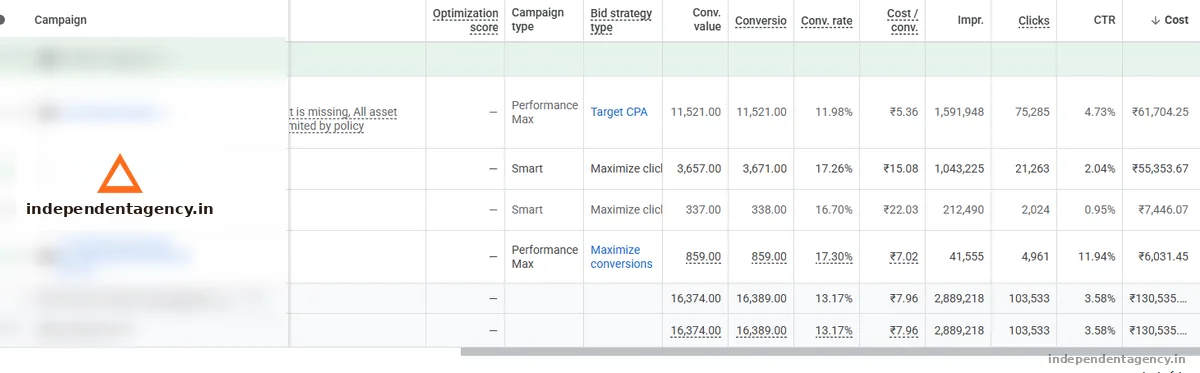
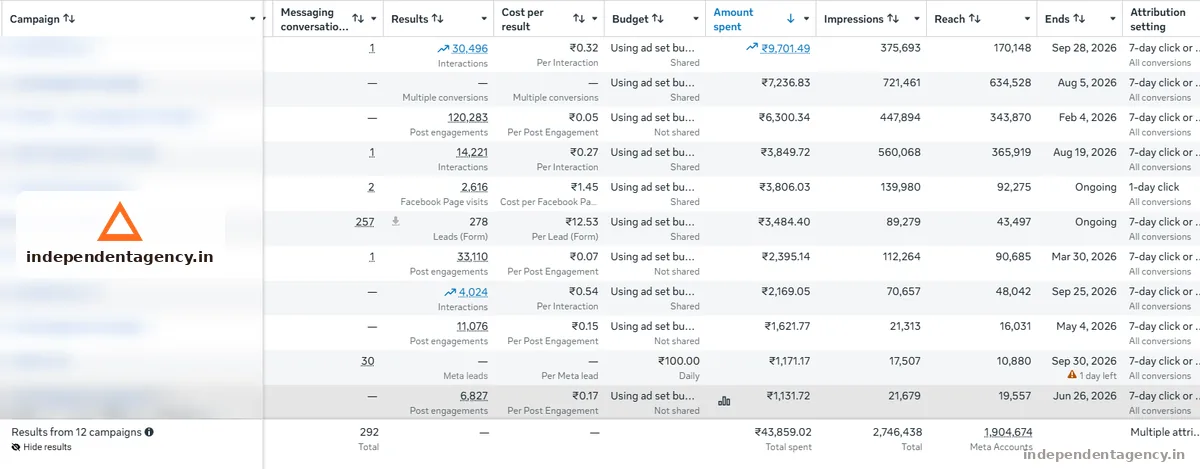
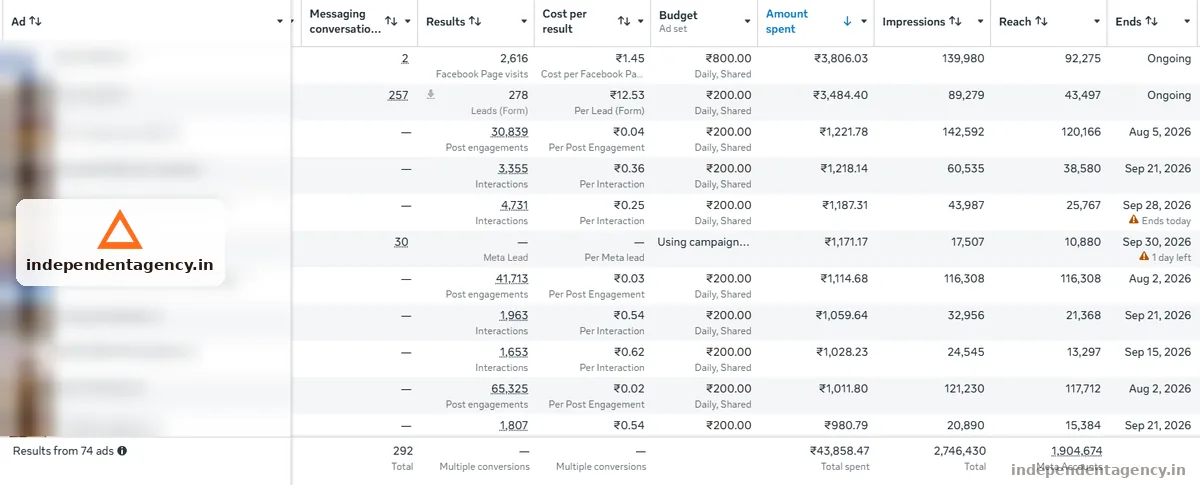
On Meta, 74 creatives across 12 campaigns — mostly engagement and interaction objectives on ₹200 daily budgets, with a single lead campaign running alongside as a control. On Google, a Performance Max campaign on target CPA, two Smart campaigns on maximise clicks, and a separate Performance Max campaign specifically for local store visits and promotions.
Performance data
| Metric | Meta Ads | Google Ads |
|---|---|---|
| Campaigns / ads | 12 campaigns, 74 ads | 4 campaigns |
| Spend | ₹43,859.02 | ₹1,30,535+ |
| Impressions | 2,746,438 | 2,889,218 |
| Reach / clicks | 1,904,674 reach | 103,533 clicks |
| CTR | Data not available in the supplied records | 3.58% |
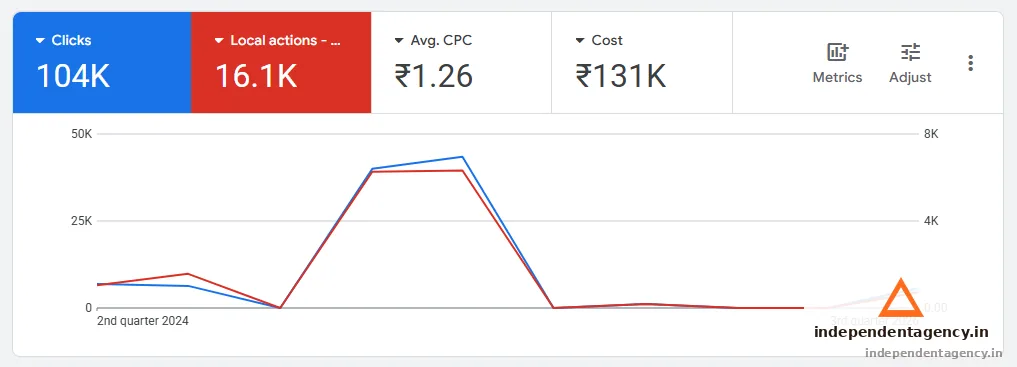
| Avg. CPC | Data not available in the supplied records | ₹1.26 |
| Primary result | 278 Instant Form leads at ₹12.53 | 16,389 conversions at ₹7.96 |
| Secondary result | 287 messaging conversations | 13.17% conversion rate |
| Engagement cost | ₹0.02 – ₹0.62 per action | — |
| Campaign types | Engagement, traffic, leads, page likes | Performance Max, Smart, local |
| Period | Through September 2026 | Q2 2024 – Q3 2026 |
Results
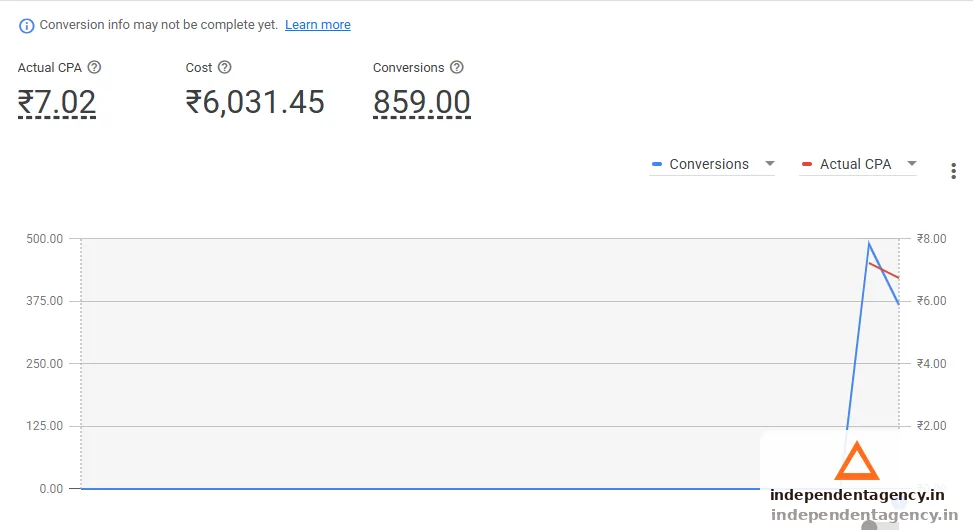
Google delivered 16,389 conversions at ₹7.96 with a 13.17% conversion rate on ₹1,30,535 of spend, including 859 local store-visit conversions at ₹7.02. Meta delivered 2.75M impressions to 1.9M people at engagement costs between two paise and sixty-two paise, plus 278 Instant Form leads at ₹12.53 and 287 messaging conversations from the one lead campaign.
What we learned
The two platforms answer different questions, and the reporting has to respect that. ₹0.02 per post engagement and ₹7.96 per conversion cannot be blended into one number. We report them separately, every month, even though a single blended figure would look more impressive.
"Conversions" needs defining before it is quoted. The 16,389 Google conversions include local actions — direction requests and calls — not only form fills. That is the right metric for a store-led business, and it is also why this number should never be compared against a Meta form-lead count from another agency's deck.
Engagement at sub-rupee cost is worth buying in a considered category. In a market where the purchase happens in a shop, being familiar before the customer walks in is worth more than an enquiry form from someone who was not going to buy yet.
Budget pauses look like collapses in a two-year chart. The sharp spike and drop in the clicks chart is a budget pause, not a performance failure. We have left it visible rather than cropping the screenshot, because that is the kind of edit that makes portfolio data untrustworthy.
Campaign screenshots
Client names, campaign names, ad names and creative thumbnails are blurred. Every performance figure is unedited.

Frequently asked questions
What does digital marketing cost for a plywood business?
This account ran ₹1,74,394+ across two years — ₹43,859 on Meta and ₹1,30,535 on Google. Google conversions averaged ₹7.96 and Meta engagement ran between ₹0.02 and ₹0.62 per action.
Do plywood businesses get leads from Facebook ads?
Some. This account produced 278 Instant Form leads at ₹12.53 and 287 messaging conversations. But most of Meta's value here was awareness at sub-rupee cost, not enquiries — plywood buyers usually decide in a shop.
What counts as a conversion in the Google figures?
Form fills, calls and local actions such as direction requests. For a store-led business those are the actions that matter. They are not directly comparable with a Meta form-lead count.
Which Google campaign types worked?
Performance Max on target CPA carried the largest volume at ₹5.36 per conversion. A separate local store-visit Performance Max campaign delivered 859 conversions at ₹7.02.
Can you do this for other building-material businesses?
We have run this structure for one plywood brand. We are not going to claim category-wide expertise from a single client — the split-platform logic transfers, the specific numbers may not.
Related work
Performance figures on this page come from selected campaigns and reporting periods in our portfolio records through September 2026. Several screenshots are filtered views of the same ad account, so totals are calculated from distinct accounts only. Results vary with market, budget, targeting, offer, competition and sales follow-up.